Salamanca Travel Guide: Cathedrals, University and the Golden City
Salamanca, in western Spain's Castile and León region, is a city made for walking. Its golden sandstone architecture, ancient university, monumental squares and lively streets offer a rare combination: an outstanding historic setting that still feels unmistakably lived in. Its old city is a UNESCO World Heritage Site, and the best way to appreciate it is to give yourself time to wander.
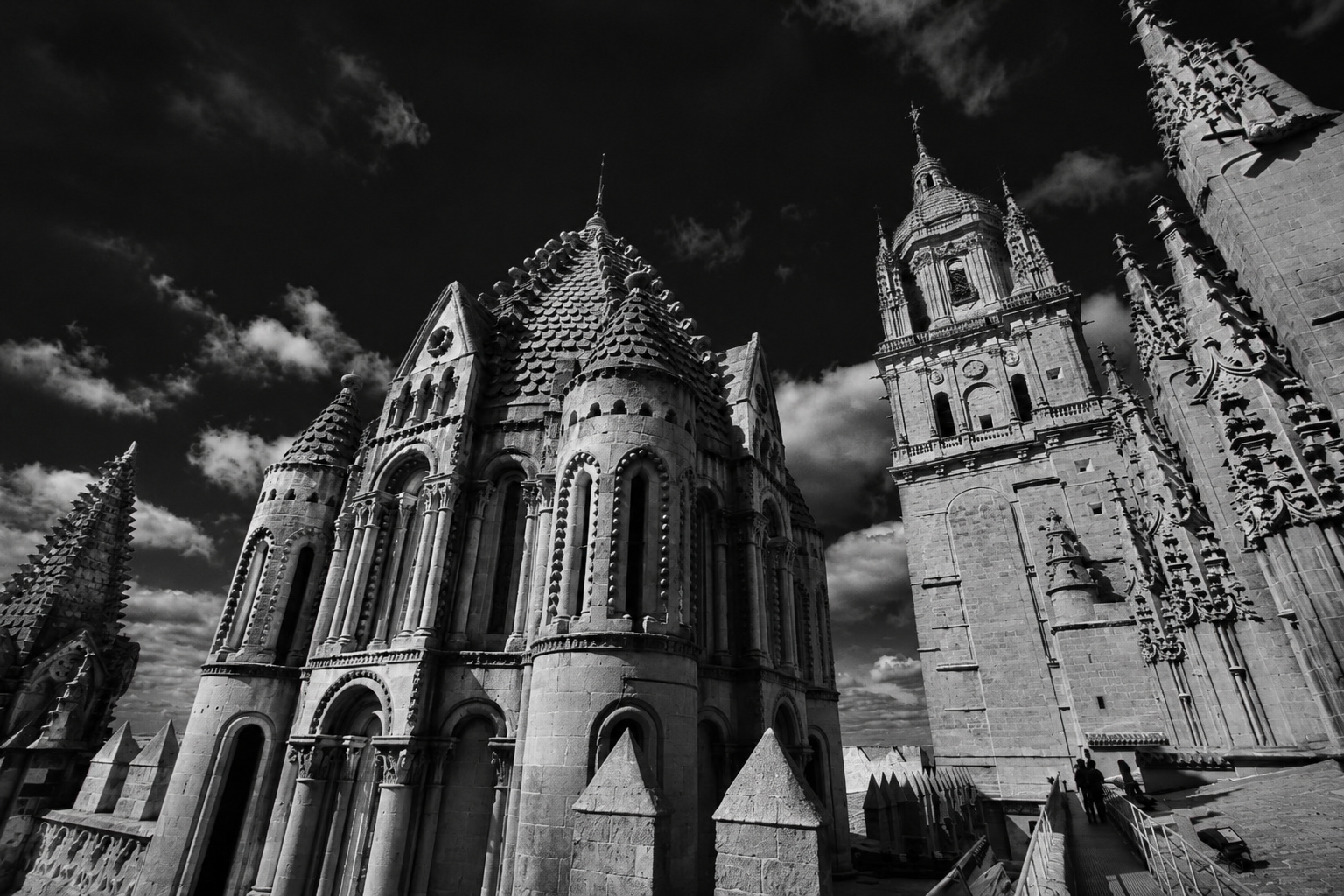
Salamanca's cathedral complex seen from above. Photograph hosted by TravelMktg.com.
Start with the two cathedrals
Salamanca's most remarkable architectural pairing is its Old Cathedral and New Cathedral, built alongside one another. The Old Cathedral dates to the 12th century and is celebrated for its Romanesque fabric, particularly the Torre del Gallo, a distinctive dome whose layered stonework and little turrets are unmistakable. The larger New Cathedral was begun in the 16th century and combines late Gothic grandeur with Renaissance and Baroque elements. Look for the contrast between the intimate, sculptural details of the older building and the imposing vertical lines of its neighbor.
For an unusually close view, consider the Ieronimus tower route. Visitors climb through passages and terraces overlooking the cathedral roofs and Salamanca's skyline. The image above captures this extraordinary setting: Romanesque arches, textured stone roofs, the taller cathedral tower and an elevated visitor walkway, all beneath a dramatic sky. Check current access arrangements and opening hours before visiting, especially if stairs or heights are a concern.
Walk through the university quarter
The University of Salamanca, founded in 1218, is among Europe's oldest universities. Its historic buildings are central to the city's identity. Spend time examining the intricate Plateresque façade of the historic university building, then explore the surrounding streets, courtyards and small squares. The nearby Casa de las Conchas, recognizable by the scallop shells decorating its exterior, is another rewarding stop.
Experience Plaza Mayor
Salamanca's Plaza Mayor is one of Spain's great public squares. Its harmonious arcades, ornate façades and broad open space make it appealing at almost any hour. Visit in daylight to appreciate the architecture, then return after sunset, when the illuminated sandstone and busy terraces create a completely different mood. It's an ideal place to pause over coffee, tapas or a leisurely meal.
Cross the Roman bridge and explore the river
Walk toward the Tormes River for wider views of the city. The historic Roman bridge offers a memorable perspective on Salamanca's cathedral skyline. The riverside paths provide a quieter contrast to the center's lively streets and are particularly pleasant in the late afternoon. If you're photographing the city, this is a good place to capture the relationship between its monumental buildings and the surrounding landscape.
What to eat
Salamanca and the surrounding province are known for hearty Castilian cooking. Look for hornazo, a savory pastry traditionally filled with cured meats and egg, as well as local cured ham, cheeses and classic tapas. Rather than racing between attractions, make room for a long lunch or an evening of small plates. The pleasure of Salamanca lies as much in its everyday rhythm as in its monuments.
When to visit and how long to stay
Spring and autumn are excellent choices for comfortable walking and sightseeing. Summer can be hot, while winter brings colder temperatures and a different, often quieter atmosphere. A full day covers the principal landmarks, but two nights allow for the rooftop tour, university quarter, museums, riverside walk and an unhurried evening in Plaza Mayor.
Salamanca is accessible by road and rail from Madrid and other Spanish cities; check current schedules when planning your journey. Most major sights are within walking distance in the historic center, though cobbled streets and cathedral stairways make comfortable footwear a wise choice.
A final reason to go
Salamanca's beauty is not confined to a single landmark. It comes from the way the city fits together: the golden stone, the university traditions, the cathedral silhouettes and the public squares that remain part of daily life. For photographers, the rooftops offer astonishing geometry and texture; for everyone else, the reward is a city that makes history feel close enough to touch.
For another perspective on the cathedral rooftops and the photograph featured here, read Salamanca From Above on TravelMktg.com.