Plaza Mayor Madrid: A 400-Year-Old Square, a King on Horseback and a City Without a Tourist Tax
Every visitor to Madrid ends up in the Plaza Mayor at some point, usually more than once. It's ten minutes from the Puerta del Sol, enclosed on all four sides, entered through arches, and big enough to swallow a crowd without feeling full. Madrid marked its 400th anniversary in 2017.
The square has burned and been rebuilt more than once. In 1617 the architect Juan Gómez de Mora was commissioned to turn the old market square of the Arrabal into a single unified plaza. After a big fire in 1790, Juan de Villanueva rebuilt it, lowering the facades by two storeys, closing the corners and adding the nine arched entrances you walk through today.
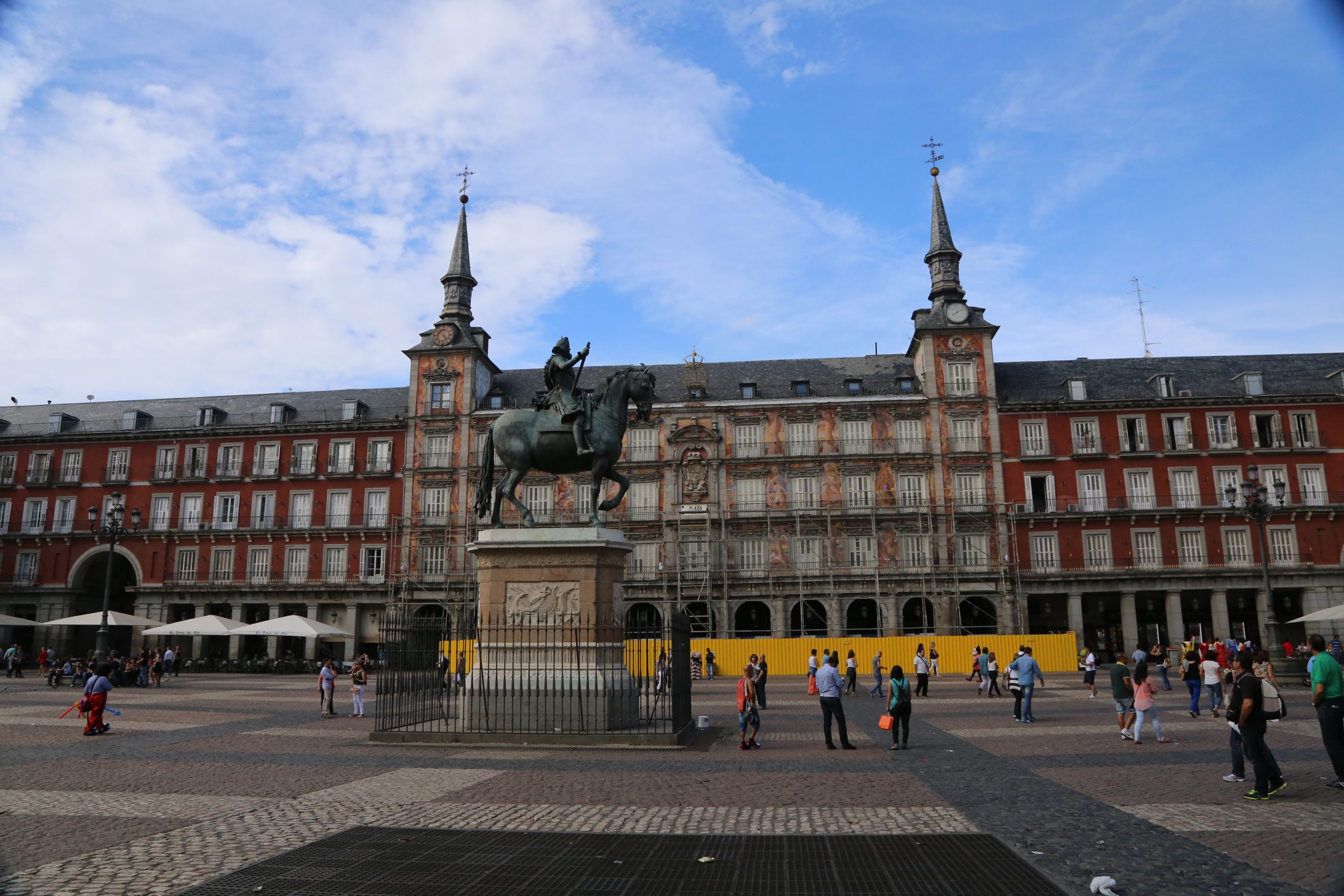
A bright day with fast clouds. Philip III on his bronze horse in the middle, the red facade with its twin spires behind him, café umbrellas lined up under the arcades, a few dozen people spread across the paving. The statue was designed by Giambologna and finished by Pietro Tacca in 1616. Queen Isabel II gave it to the city, and it was moved here in 1848.
What's in it
The building with the painted facade is the Casa de la Panadería, the old bakers' guild house. It's older than the rest of the square, built around 1590, and today it holds Madrid's main tourist office. Go in for maps and free advice.
The terraces under the arcades are the most expensive coffee in the area, because you're paying for the view. Fair enough once. For lunch, walk a few minutes to the Mercado de San Miguel, or better, down Calle de Toledo to the tapas bars of La Latina. The square's famous fried calamari sandwich is sold in the bars on the side streets around it.
The money question
Madrid is one of the few big European capitals with no tourist tax. Barcelona has one, Lisbon charges €4 a night, Paris and Rome charge more. In January 2026 the Socialist opposition in the city council proposed a Madrid levy and estimated it would raise more than €100 million a year. Both the city government and the regional government said no.
So the square is free, the night in Madrid has no extra charge, and the Prado up the road is free for its last two hours every day. Madrid stays good value for a capital.
Come back at night. The arcades are lit, the crowd thins, and the Casa de la Panadería glows.