Musée des Confluences Lyon: A €255 Million Building, 700,000 Visitors a Year and a €12 Ticket
At the southern tip of Lyon's Presqu'île, where the Rhône and the Saône meet, there's a museum that looks like a cloud of glass and steel crashed into a concrete plinth. The Musée des Confluences opened on December 20 2014, designed by the Austrian practice Coop Himmelb(l)au. It covers 22,000 square metres, of which 6,500 are exhibition space.
It was expensive. The final cost is usually put at about €255 million, roughly four times the first estimate. A taxpayers' group counts €286.7 million, or more if you include rebuilding other facilities on the site. For years that overrun was the first thing anyone in Lyon said about the building.
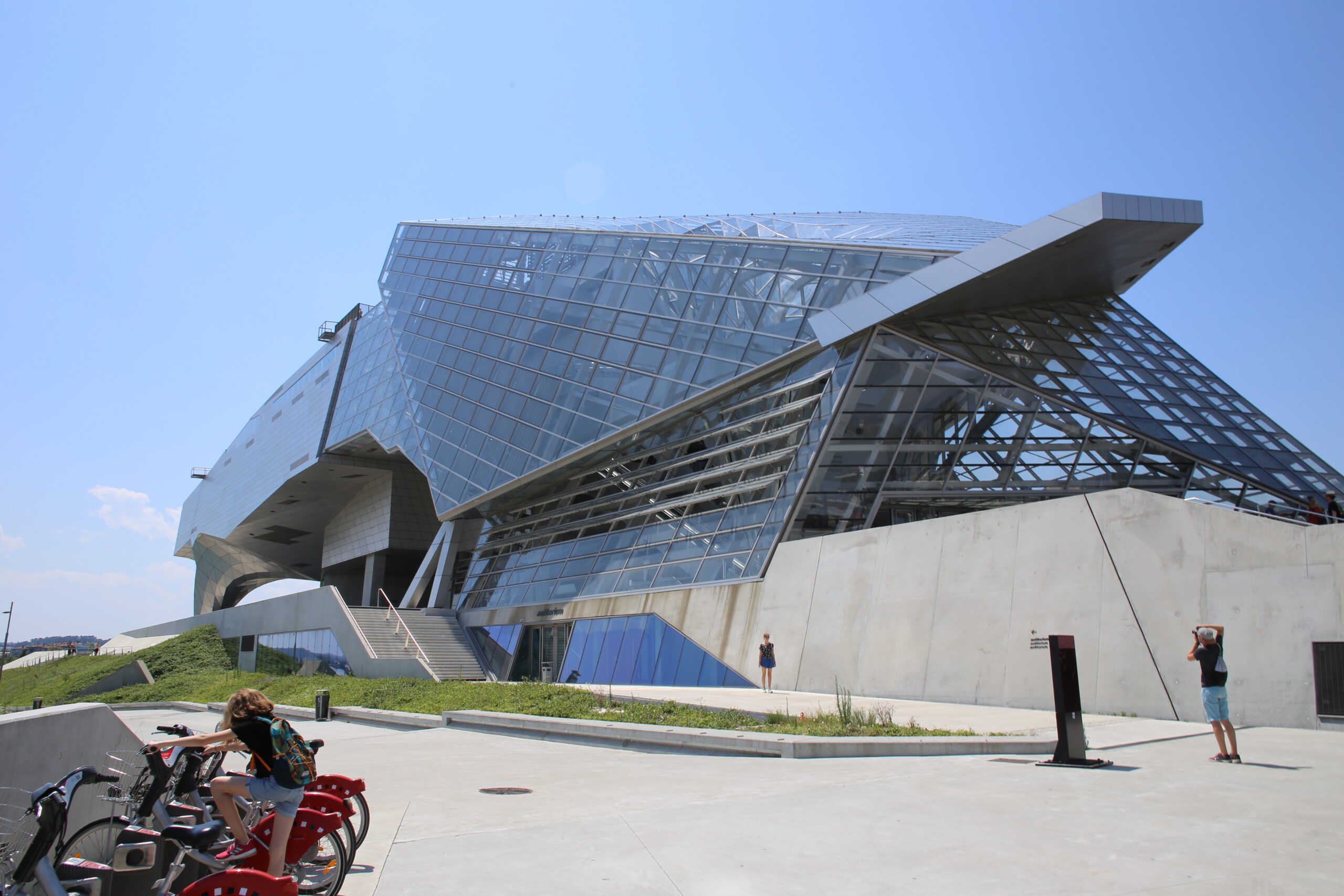
The glass prow tilts out over the plaza, the steel panels fold away to the right, and a row of red city bikes waits in the foreground. It looks unfinished from some angles and spectacular from others, which is more or less what Coop Himmelb(l)au intended.
The numbers since
The argument has quietened, mostly because people keep coming. The museum counted 708,965 visitors in 2024 and 699,387 in 2025, open on 319 days, which works out to about 2,200 a day. It passed 7.1 million visits in total. About 17% come from abroad, so most of the audience is French, often families on a day out.
What they come for is a natural history and anthropology collection of more than 2.2 million objects, from fossils and minerals to objects from cultures around the world. It inherited the collections of Lyon's old natural history museum.
Visiting
Tickets were €12 full and €7 for ages 18 to 25, with an annual pass at €23, the last time the city published prices. Check before you go. It opens Tuesday to Sunday from 10:30 to 18:30, and until 22:00 on the first Thursday of the month. It's closed on Mondays, January 1, May 1 and December 25.
The T1 tram stops outside. Or walk south along the river from the centre, past the converted docks of the Confluence district.
Don't skip the garden at the point. You can stand where the two rivers actually meet, for nothing.