Saint-Émilion Wine Tourism: A Million Visitors, a €15 Underground Tour and Bordeaux Pulling Up Vines
Saint-Émilion sits forty minutes from Bordeaux and its Cité du Vin by local train and gets about a million visitors a year. That's a lot for a town of narrow stone lanes on a limestone slope, and most of them come for the same two things: wine, and the church cut out of the rock underneath it.
The appellation covers about 5,400 hectares, split between Saint-Émilion AOC and Saint-Émilion Grand Cru. The wider Jurisdiction of Saint-Émilion, eight communes, was listed by UNESCO in 1999 as a cultural landscape. The vines come right up to the town walls.
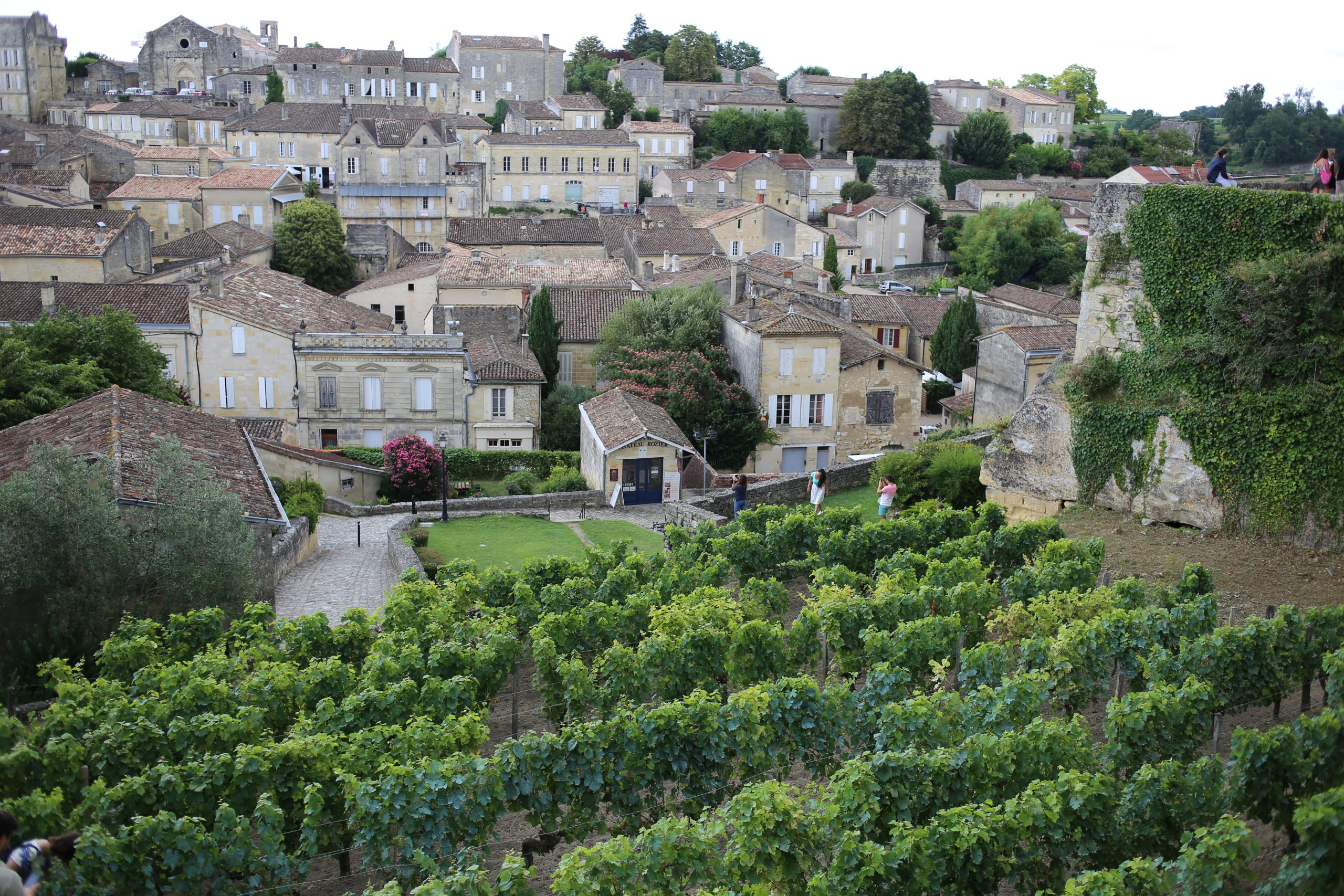
The photo shows it well. Rows of vines at the bottom of the frame, a lawn, then the honey-coloured houses climbing the hill, close enough to throw a cork at. There isn't really a line where the town stops and the wine starts.
What it costs to visit
The town is free to walk. The main paid sight is the underground tour run by the tourist office, which takes in the hermitage, the Trinity chapel, the catacombs and the monolithic church. It costs €15 for adults and €12 reduced, takes about an hour, and has to be booked. Tours are in French, with printed translations in eleven languages. The bell tower costs €2 more.
Châteaux tastings vary a lot. Some estates take walk-ins, many want bookings, and the famous names charge for the visit. Ask the tourist office which ones are open on your day.
Getting there is easy. The TER from Bordeaux Saint-Jean stops at Saint-Émilion station, a short walk below the village. It takes about 40 minutes and fares start around €5. High-speed trains stop at Libourne, 7 km away.
The bad news under the good wine
Bordeaux is going through a rough patch. Demand for its red wine has dropped, and the region is paying growers to pull up vines. A 2023 decree set €6,000 per hectare, with about 9,251 hectares put forward in the first round and around 8,000 already uprooted by 2025. The 2025 harvest came in about 15% below the five-year average after heat and drought.
None of that touches the Grand Cru slopes around this town, which are the last place anyone will pull up. But it explains why the region wants visitors more than ever. Come in late September or early October and you'll see the harvest, smell it in the lanes, and probably get a better welcome at the cellar door.